Where was Lost filmed? Key filming locations
The mysterious island in Lost was fictional, but much of what viewers saw was real Oʻahu. Beaches, valleys, camps and city buildings across the island repeatedly became completely different parts of the show.
In this article10 sections
The Island in Lost was supposed to feel impossible to place. Jungle could give way to a beach, a hidden settlement or a piece of somebody’s past without the audience ever getting a reliable map.
In the real world, the answer is much simpler: Lost was filmed overwhelmingly on Oʻahu, Hawaiʻi.
The production repeatedly transformed the same island into very different fictional places. North Shore beaches became the survivors’ home. A working YMCA camp became the Others’ settlement. A huge private ranch supplied valleys, bunkers and DHARMA locations. Honolulu buildings stood in for places thousands of miles away.
That flexibility is one reason the fictional Island feels much larger than the real production footprint behind it.
Where was Lost filmed?
Most of Lost was filmed across the Hawaiian island of Oʻahu.
The Hawaiʻi Film Office lists the series as an Oʻahu production and records its Hawaiʻi production run from March 2004 to 2010. A 2024 SFGATE retrospective, published for the show’s twentieth anniversary, likewise describes the series as having been filmed almost entirely on Oʻahu.
There was no single real-world location that represented every part of the Island. Instead, the production used beaches, forests, valleys, camps, buildings and controlled production spaces around Oʻahu, redressing them whenever the story needed somewhere new.
That means a Lost filming-location trip is less about finding “the Island” and more about recognising how many different pieces of Oʻahu were stitched together to create it.
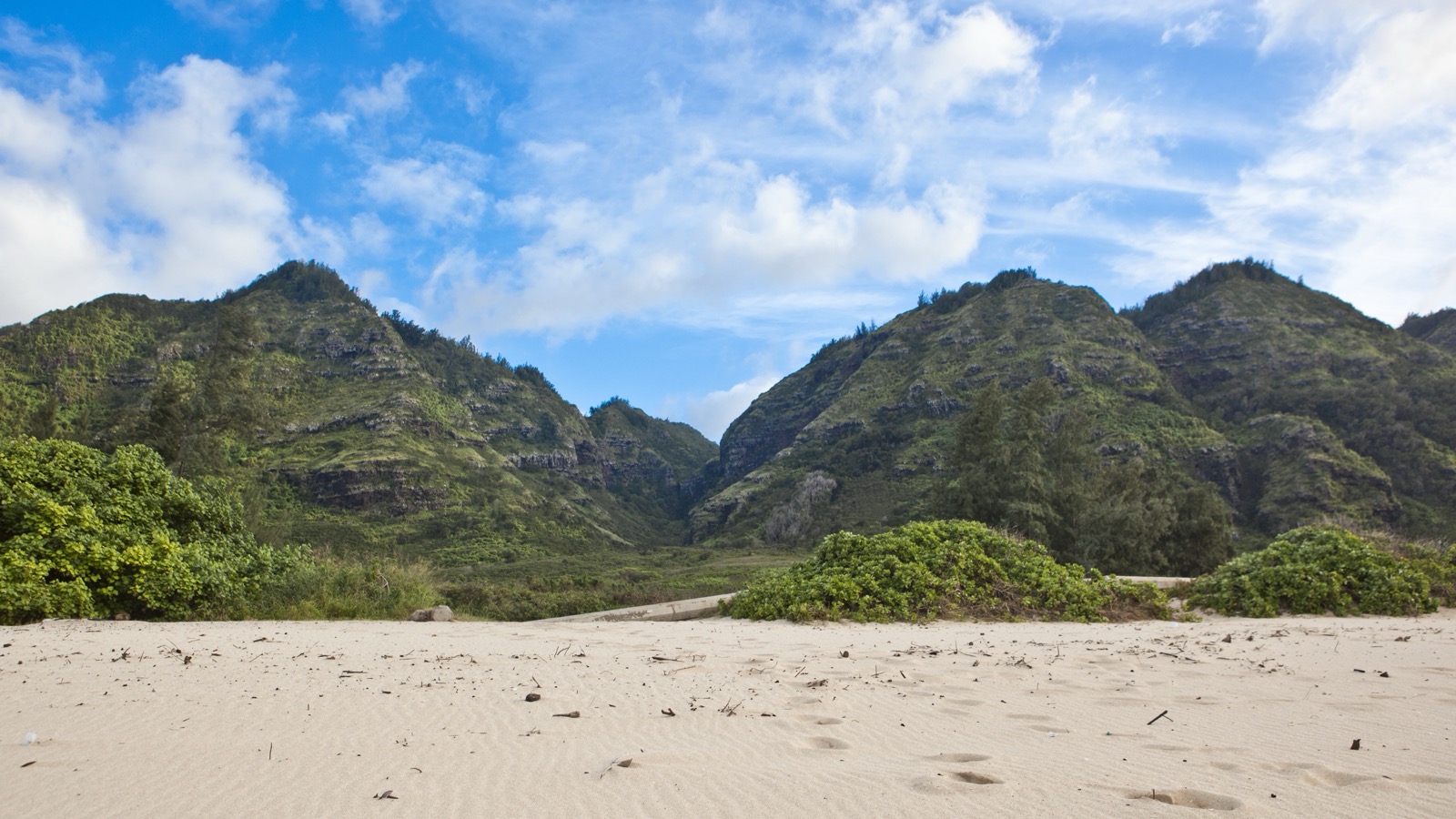
Mokuleʻia Beach: where Oceanic Flight 815 arrived
One of the most important locations was on Oʻahu’s North Shore around Mokuleʻia.
The beach was used for the original Oceanic Flight 815 crash material in the pilot. The wide shoreline and mountains immediately established the visual language of the series: beautiful enough to look like paradise, but isolated enough to make rescue feel very far away.
This is an important distinction because Lost did not use one beach camp for its entire run. The original crash location and the beach that later became the survivors’ familiar camp were not the same place.
Mokuleʻia remains a real Oʻahu beach rather than a preserved television set. Visitors should treat it as exactly that: a natural public place, not an abandoned studio attraction.
Papailoa Beach: the survivors’ later beach camp
For the beach camp seen through much of the series, the production used Papailoa Beach on Oʻahu’s North Shore.
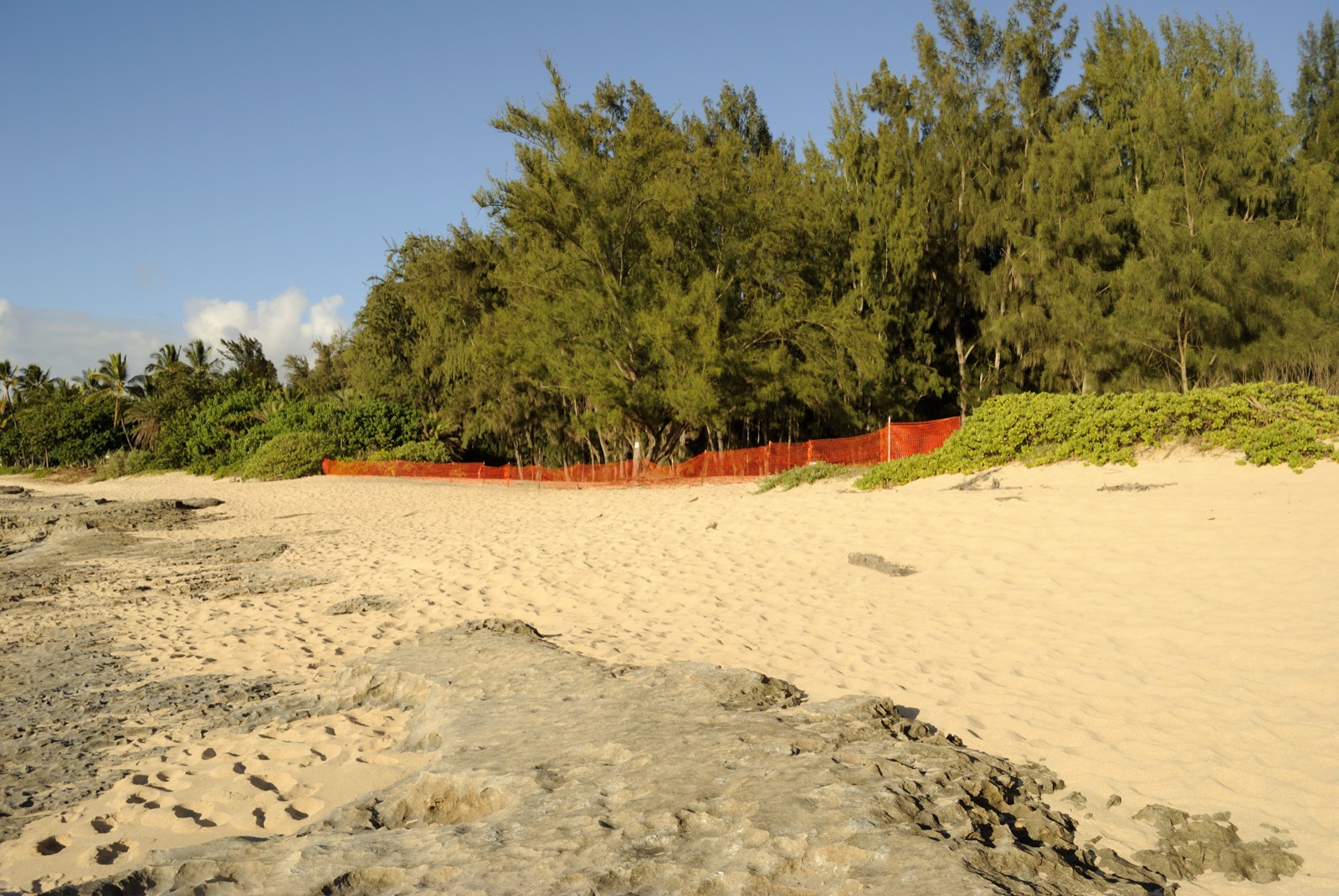
The beach is also commonly known in location guides as Police Beach. Current Hawaiʻi land-management material identifies Papailoa Beach and public beach access from the Papailoa Road area.
The old Lost camp is not waiting there like an outdoor museum. The production structures and props are gone. What remains is the real shoreline, rocks, vegetation and surrounding landscape that viewers spent years seeing behind the survivors.
That actually makes it an interesting location for fans: instead of visiting a replica, you are looking at the physical environment that the production repeatedly framed as daily life on the Island.
Camp Erdman: the Others and DHARMA barracks
One of the easiest places for a Lost fan to recognise is YMCA Camp Erdman near Mokuleʻia.
The real camp supplied the bungalows used as the settlement associated with the Others and the DHARMA Initiative. The neat little houses were such a contrast to the jungle and beach camps that their first appearance immediately made the Island feel stranger and more organised than viewers had assumed.
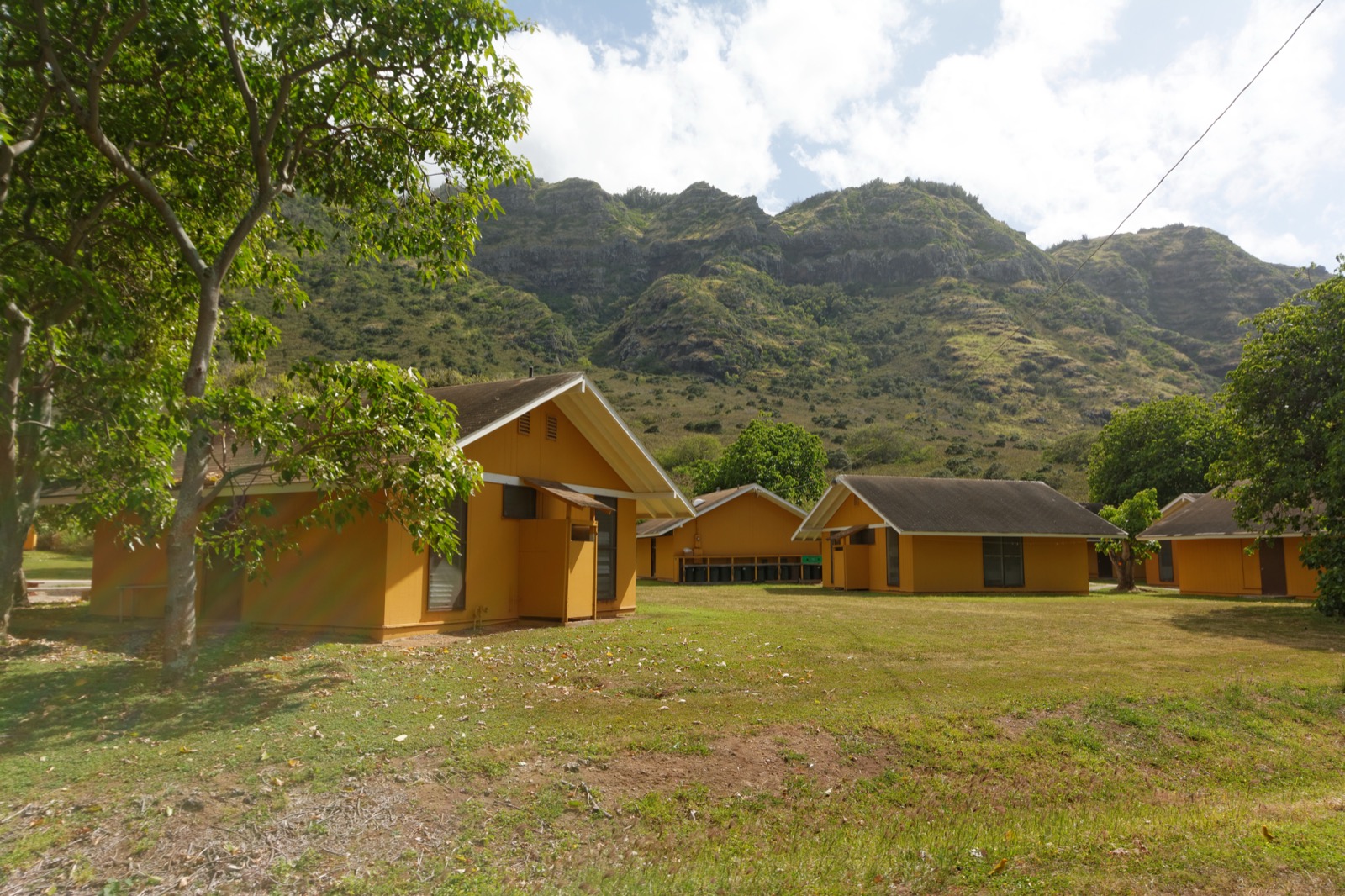
Camp Erdman is not an abandoned set. It remains an operating YMCA camp with youth, family and group programmes.
In SFGATE’s 2024 report, Camp Erdman’s senior executive director said Lost visitors still arrive regularly and that visitors are welcomed to check in before walking the grounds. The camp even provides information about points of interest. The famous buildings have changed since filming — including their colour — but the basic location is still there.
That makes Camp Erdman unusually tangible compared with many television locations, but it also means visitors should remember that they are entering an active camp rather than wandering onto a public film set.
Kualoa Ranch: Hurley’s golf course, the DHARMA van and much more
If one place demonstrates how efficiently Lost used Oʻahu, it is Kualoa Ranch.
The ranch confirms that Lost was among the television productions that used its landscapes. Its valleys and other locations have served so many productions that Kualoa describes itself as Hawaiʻi’s backlot.
For Lost, Kaʻaʻawa Valley became several memorable pieces of the Island. SFGATE reported, with information supplied by Kualoa Ranch, that the valley was used for the survivors’ golf course and Hurley’s DHARMA van sequence. Other Kualoa locations were used for elements including the Tempest station entrance, the sonar fence, the Jughead bomb and submarine-related material around the fishpond.
That list helps explain why the show’s geography can feel impossible. One real property could become several fictional locations that were never supposed to sit beside one another.
Kualoa is also one of the easiest major Lost production locations to visit in a formal way. The ranch currently operates its Movie Sites & Ranch Tour through Kaʻaʻawa Valley. Current tour details can change, so anyone planning a visit should check Kualoa directly rather than rely on an old filming-location guide.
Waimea Valley: the waterfall
Another recognisable North Shore location is Waimea Valley.
Its waterfall and pool appeared in Lost, including the location where Kate and Sawyer dealt with the locked case and where several returning characters later found themselves after the Ajira flight.
Unlike a closed production property, Waimea Valley is an established visitor attraction. Its official site currently describes a paved route through the valley ending at Waimea Falls and publishes current admission and access information.
The important thing for a Lost fan is that the waterfall was not created for television. The production was using an existing landscape and letting viewers believe it belonged to a fictional island somewhere else in the Pacific.
Oʻahu also became Korea, Australia and Los Angeles
The cleverest location work in Lost was not always on the Island.
Because the series constantly left the present-day Island for flashbacks, flash-forwards and other parts of its story, Oʻahu had to impersonate much more than one tropical location.
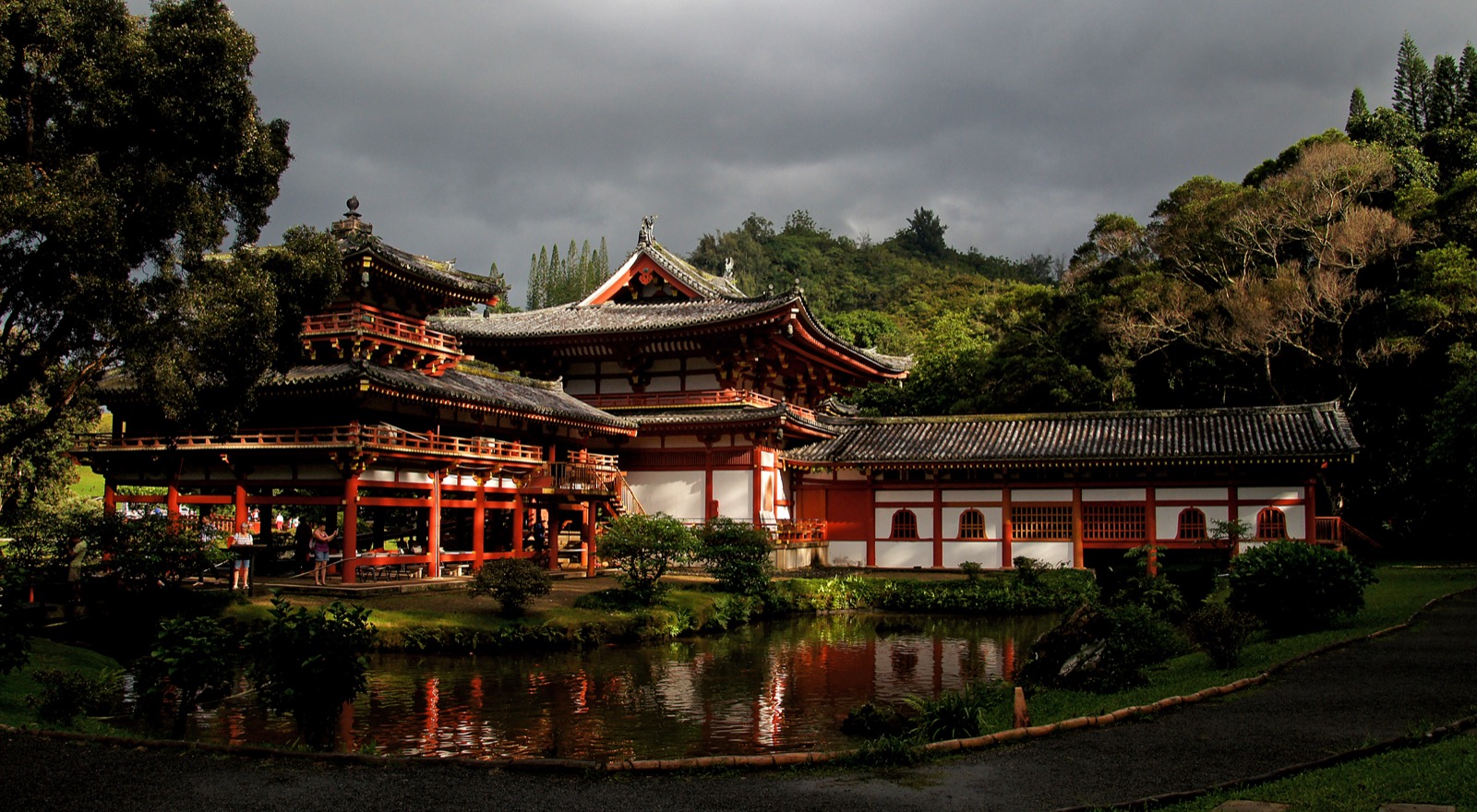
The Byodo-In Temple in Kaneohe was used for Korean-set scenes involving Sun and Jin. The real temple sits beneath the Koʻolau Mountains, yet on screen it could become part of a character’s life on the other side of the Pacific.
The Hawaiʻi Convention Center was transformed into Sydney Airport. Honolulu streets and buildings could stand in for parts of Los Angeles and other cities. Even when the story appeared to have travelled thousands of miles from the Island, production often had not left Oʻahu at all.
This is one of the most impressive parts of revisiting Lost as a production rather than only as a story: the series did not merely find a convincing tropical island. It kept finding new worlds inside the same real one.
Can you still visit Lost filming locations?
Yes — several of the best-known locations can still be visited, but they are not all the same kind of place.
| Location | What it represented | Visitor situation |
|---|---|---|
| Mokuleʻia | Original crash-area beach | Real North Shore beach; respect current local access and conditions |
| Papailoa Beach | Survivors’ later beach camp | Public beach access exists; old set and props are gone |
| YMCA Camp Erdman | Others / DHARMA settlement | Active YMCA camp; check in and respect current camp operations |
| Kualoa Ranch | Golf course, DHARMA van and multiple Island locations | Private property with official film-location tours |
| Waimea Valley | Waterfall scenes | Ticketed visitor attraction with current public access |
| Byodo-In Temple | Korean-set scenes | Visitor attraction; check current admission and rules |
Access rules, opening hours and prices can change. A filming location that appears open in a decade-old fan guide may now operate differently, so current official information should always take priority.
And some of the most recognisable places are still beaches, camps, cultural sites and working businesses before they are Lost landmarks. Visiting them respectfully is part of keeping them accessible.
Why did Oʻahu work so well as the Island?
The simplest answer is variety.
Within one production base, Lost could find beaches, mountain valleys, dense vegetation, waterfalls, urban streets, distinctive architecture and controlled filming facilities.
The Hawaiʻi Film Office describes the state as capable of representing a wide range of geographic looks, and Lost exploited that flexibility constantly.
But there was also a creative advantage. Reusing one island in so many different ways helped the fictional Island resist a simple visual definition. A viewer could never quite decide what should be on the other side of the next ridge.
That made Oʻahu more than a convenient tropical backdrop. Its variety became part of the illusion that the Island was larger, stranger and less knowable than any normal place.
The real Lost island is a collection of places
There is no single spot on Oʻahu where you can stand and say that everything in Lost happened there.
The crash beach, survivors’ camp, Others’ settlement, waterfall, DHARMA locations and off-Island flashback settings were assembled from different parts of the same Hawaiian island.
That is exactly what makes the locations interesting.
The fictional Island was mysterious because its geography never quite behaved like a normal place. Behind the camera, the production achieved a similar effect by repeatedly taking real Oʻahu and asking it to become somewhere else.
Editorial references
Sources
-
Productions in Hawai`i
Accessed 2026-08-28
-
Television Series and Specials Shot in Hawaii
Accessed 2026-08-28
-
TV series 'Lost' crashed onto this Hawaii island 20 years ago
Published/updated 2024-09-08 Accessed 2026-08-28
-
The Backlot Of Hawaiʻi
Accessed 2026-08-28
-
Movie Sites & Ranch Tour
Accessed 2026-08-28
-
YMCA Camp H.R. Erdman
Accessed 2026-08-28
-
Waimea Valley
Accessed 2026-08-28
-
Permissible Unencumbered Shoreline Beach Locations
Accessed 2026-08-28
More from Watchmora Journal
Inception ending explained: what it really means
Inception cuts to black before Cobb's spinning top gives us a final answer. Mechanically, the ending stays ambiguous. Emotionally, Cobb has already made his decision.
Read story
Don't know what to watch? Try searching Watchmora like this
You do not need to know a movie title to start searching. A mood, genre, format or even something you do not want can be enough to narrow the catalogue into something useful.
Read story
Four mystery series for four very different moods
Some nights you want a mystery that feels clever and easy to watch. Other nights you want something bleak, forensic or completely outside the usual police formula. These four series cover very different moods.
Read story
What is a retcon in movies, TV and comics?
A retcon changes how an established story is understood by adding, rewriting or removing information later. But not every surprise, reboot or continuity mistake is a retcon.
Read story