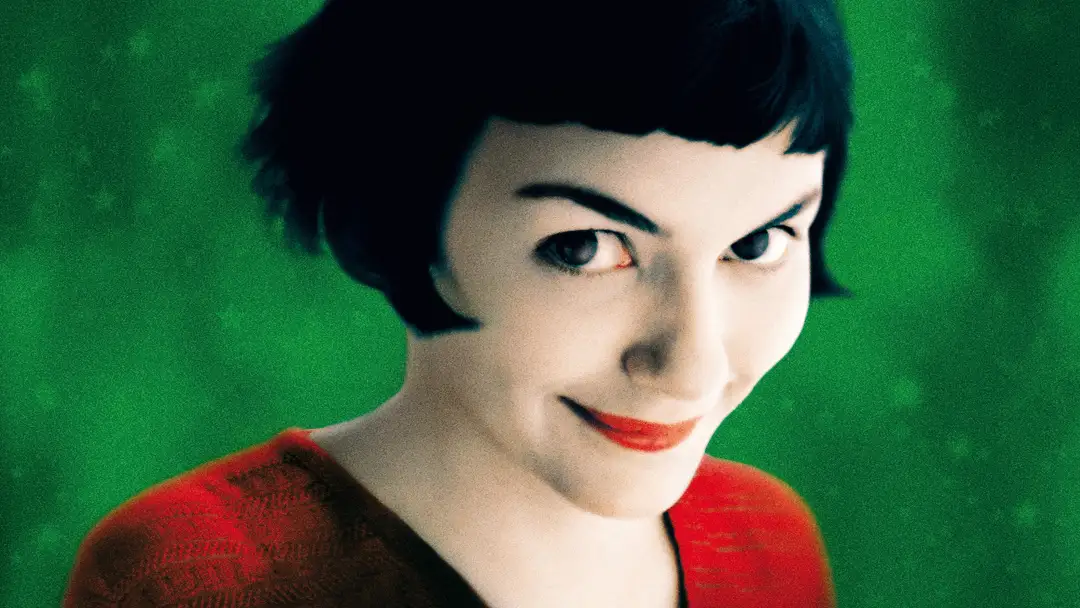
Getting to know Nino through the lost album in Amélie
A torn photo strip and a misplaced album offer a way into Jean-Pierre Jeunet’s Paris romance. Look at the edges and leave the mystery intact.
In this article3 sections
What would you learn about a stranger by looking through their photo album? In most albums you could make a decent start with the faces. A woman turns up at three different birthday parties. Two boys grow taller beside the same front door. In Nino’s album in Amélie, that approach gets you nowhere. The people in his pictures left them behind at photo booths around Paris. The best clue to the owner lies in how the pictures got there. Somebody took the trouble to pick them up.
That makes Jean-Pierre Jeunet’s 2001 film a lovely prospect for anyone who likes the early stages of a romance, when learning one small thing about a person can rearrange an entire afternoon. Audrey Tautou plays a café waitress in Montmartre. Mathieu Kassovitz plays the man whose peculiar collection she comes across. There is a mystery inside his album. We’ll leave its answer, and the outcome of their courtship, to the film.
The photograph you would throw away
Imagine feeding coins into a booth to get a picture for an identity card. The flash catches you with your mouth half open. You can picture the years you might spend handing this particular face across counters. Tearing it up seems an entirely reasonable decision. Now imagine somebody crouching down when you have gone, noticing two pieces of the same collar and taking the trouble to fit them together. What you did in a second might occupy a stranger until lunchtime.
Nino makes a hobby of reclaiming pictures like these. Think about how much a discarded strip leaves out. We have no way of telling whether the sitter hated the haircut, needed just one print out of four or simply dropped it on the way to a train. Each explanation would give us a slightly different person. The film can keep that uncertainty alive because what interests Amélie first is the collector. There may be dozens of reasons to throw a photo away. How many people would make a special trip to look for one?
Here is a little test for the album scenes. Pick out a single face and notice what story comes to mind. Then move your attention to the torn edge. For a moment the interesting gesture belongs to the unseen hands that put it back together. It’s an unusually economical introduction to a romantic lead. We know something quite intimate about how he chooses to spend his time before he has had an opportunity to impress anybody.
How do you give an album back?
At a station Nino drops his album and Amélie retrieves it. In an ordinary lost-property office the next steps would be reassuringly dull. Identify the owner, arrange collection, perhaps ask for a signature. In a romantic comedy each of those practical decisions acquires an embarrassing second purpose. Returning the album is a good reason to see him. Completing the errand will also use up her good reason to see him.
If you have ever kept a borrowed book for an extra day because returning it meant figuring out what to say at the door, you already know the scale of the difficulty. Amélie has an advantage most shy people can only dream of. She can devise an elaborate plan and keep herself busy carrying it out. Planning also gives her tremendous scope for postponing the one part that calls for an answer from the other person.
That’s a useful thing to carry into the film if its bright Paris and brisk introductions usually leave you outside the joke. Try following the errand instead of trying to share every one of Amélie’s enthusiasms. At any given moment, how easily could these two meet? Who has just made that easier, and who has cheerfully managed to make it more complicated? A scene that looks like pure confection can become rather uncomfortable when you count the chances someone has let pass.
Someone really did look under the booth
There is a satisfying detour for anyone who finishes the film curious about the photographs themselves. In his study of found photographs, the writer Ian Walker describes British artist Dick Jewell collecting discarded booth portraits, beginning on Brighton seafront in 1968 and continuing in London. Some were damaged. Others had just been tucked out of sight. Walker also discusses photographer and writer Michel Folco’s collection in connection with Jeunet’s film. Jewell is a fascinating parallel. It would be a stretch to give him credit for inspiring Nino.
Consider what a photographer normally gets to decide. Where to stand, when to press the shutter, which print deserves to survive. The booth has taken care of the first two decisions. The sitter has already made the third, and a collector has come along to reverse it. When a film puts that collection into the hands of a woman falling in love, there is one more choice to make. Which bit of another person’s curiosity would you like to share?
You could try a gentler version with somebody you know. Ask them to show you a photograph they nearly deleted and tell you why they kept it. You might hear an excellent story about the blurry figure at the edge. You might hear that the picture came out terribly but it’s the only one in which you can still see the old kitchen tiles. Either answer tells you something a technically perfect portrait could never have supplied.
That is the souvenir worth taking from Nino’s collection. After the mystery has an answer and everybody in the cinema knows what the clues meant, there remains the small pleasure of having met a man who would stop to pick them up. You can see why Amélie wants another afternoon with him.
Editorial references
Sources
-
Amélie
Accessed 2026-11-16
-
Ian Walker — Dick Jewell’s Found Photos
Accessed 2026-11-16
-
Amelie Director Jean-Pierre Jeunet on the Enduring Appeal of His Most Beloved Film
Published/updated 2024-07-09 Accessed 2026-11-16
More from Watchmora Journal

How A Knight’s Tale turns a joust into a stadium sport
From Queen’s opening beat to Bowie on the dance floor, A Knight’s Tale gives its crowds as much to do as its knight.
Read story
How the camera gets the joke in Abbott Elementary
Janine, Ava, Gregory and Barbara each give the documentary crew something different. Here’s what to watch for in the pilot and Wishlist.
Read story
How Parasite and Snowpiercer make class visible
Follow the stairs in the Parks’ house and the doors on Curtis’s train to see how Bong Joon Ho tells us who belongs where.
Read story
What to watch after Your Name
Go back to rain-soaked Tokyo with Weathering with You or follow Suzume through Japan. Choose your next Makoto Shinkai film by what stayed with you.
Read story