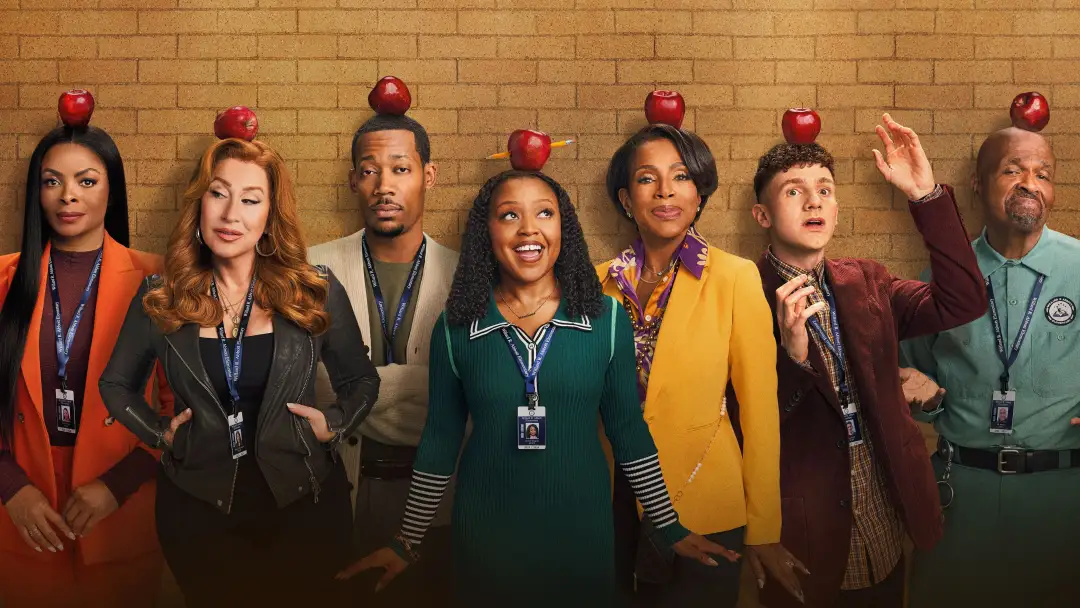
How the camera gets the joke in Abbott Elementary
Janine, Ava, Gregory and Barbara each give the documentary crew something different. Here’s what to watch for in the pilot and Wishlist.
In this article4 sections
In the pilot of Abbott Elementary, Barbara Howard already has an opinion about the documentary crew. They’re going to make it harder to do her job. That’s an unusually useful thing for a character to say about the camera through which we’re watching her. From the start, the people in this Philadelphia public school get to have different ideas about whether the crew helps, gets in the way or offers a welcome audience. Keep those ideas in mind and you can often see a joke coming before anybody speaks.
The series, created by Quinta Brunson, follows teachers making do at a school that could use more resources. On top of students and colleagues, the teachers have a camera crew to deal with. What makes that funny is how differently they handle being watched. Janine wants you to understand why the work matters. Ava sees a chance to hold your attention. Gregory would sometimes rather you hadn’t noticed him. Barbara has children to teach.
Janine and Ava want different things from the camera
Brunson, who plays second-grade teacher Janine Teagues, told The A.V. Club that Janine is eager to talk because she wants to show how good the job can be. That’s a useful distinction when she explains a plan. Her confidence might be part of her effort to make it happen. When someone else enters the frame and reacts to that confidence, the shot can do much of the work. We understand how the plan feels to the person proposing it and can make a first guess at how it will sound to everyone else.
Ava Coleman, the principal played by Janelle James, also likes being filmed. Look at what she does with the attention. For Janine, being listened to can feel like a step towards solving a problem. For Ava, commanding the room may be satisfying in itself. The same kind of direct address can carry two very different expectations. An amusing way to follow an episode is to notice which of the two seems to think the camera belongs to her in that moment.
Gregory gets caught and Barbara gets on with it
Tyler James Williams plays Gregory Eddie, who arrives as a substitute teacher. Brunson has described seeing him through the camera as a matter of catching things he would prefer to keep to himself. A glance can be a way of acknowledging that someone else saw an awkward exchange. It can also tell us Gregory is giving more away than he means to. The crew is there before he’s decided which version of himself he’d like to present.
Barbara, played by Sheryl Lee Ralph, has a different reason to keep the lens at a distance. Her objection in the pilot makes a classroom full of children feel like a real competing demand. If someone is too busy to give the crew a reaction, an obvious place for a comedy to look has just been taken away. When Barbara shares a scene with a colleague who likes the attention, watch who has to wait for her. The person with the most urgent thing to say to the documentary crew can be the person with the least urgent task in the room.
Follow the operator’s attention
Randall Einhorn, who directed the pilot, described a practical way of getting that feeling in an interview with Awards Daily. He gives camera operators information about what the people in a scene know, much as he would brief actors. That leaves operators room to decide what to look for. The timing can feel as though a person behind the camera has just twigged that the interesting part of a conversation is happening on another face.
Try watching the first time a shot moves away from the person speaking. Ask what the operator appears to have noticed. Sometimes the joke is the way a reaction changes the meaning of the words you just heard. By imagining what a real documentary crew could see, the series gives even a quick move across a room a little purpose. For a sampler, the official Warner Bros. look back at season one below gives you a chance to meet the ensemble. It includes scenes from across the season, so start with the pilot if you prefer to meet everyone in order.
Start with the pilot, then try Wishlist
Start with the pilot if you want to see how quickly those different relationships with the crew are established. In Wishlist, the third episode of season one, Janine and Ava get to film something themselves. They make a social media video to get supplies on Barbara’s behalf. That gives you two kinds of filming to think about. One crew is there to record the work of a school. The video the staff makes has a job of its own, to persuade people outside the school to help. Barbara’s discomfort matters when the person being helped gets less say in how the story is told.
Choose Abbott Elementary when you want a workplace comedy with a generous attitude towards people who disagree about how to do a job. The mockumentary format gives you a particular seat in those disagreements. It lets you share a look with one teacher, then turn and see why another has had enough of being looked at. Start with that difference and the school will feel like a place you’ve been invited into.
Editorial references
Sources
-
New Comedy “Abbott Elementary” Coming Soon to ABC
Published/updated 2021-05-18 Accessed 2026-11-22
-
Quinta Brunson on reviving broadcast TV’s mockumentary genre with Abbott Elementary
Published/updated 2022-02-15 Accessed 2026-11-22
-
Abbott Elementary Director and EP Randall Einhorn On the Fusion of Mockumentary and Education
Published/updated 2022-06-10 Accessed 2026-11-22
-
Abbott Elementary - The Story So Far
Published/updated 2022-02-08 Accessed 2026-11-22
-
Wishlist
Accessed 2026-11-22
More from Watchmora Journal
How A Knight’s Tale turns a joust into a stadium sport
From Queen’s opening beat to Bowie on the dance floor, A Knight’s Tale gives its crowds as much to do as its knight.
Read story
How Parasite and Snowpiercer make class visible
Follow the stairs in the Parks’ house and the doors on Curtis’s train to see how Bong Joon Ho tells us who belongs where.
Read story
What to watch after Your Name
Go back to rain-soaked Tokyo with Weathering with You or follow Suzume through Japan. Choose your next Makoto Shinkai film by what stayed with you.
Read story
Where to start with the modern Planet of the Apes
Start with Rise to follow Caesar, or jump to Kingdom to explore Noa’s world. A spoiler-free guide to choosing your route through the four modern films.
Read story